For owners and managers of commercial buildings, ensuring high indoor air quality is crucial. The quality of the air inside your building has a direct effect on the health, comfort, productivity, and satisfaction of your employees and customers. Poor indoor air quality can lead to a variety of issues, while a healthy indoor environment can positively impact your bottom line.
We provide Commercial Indoor Air Quality Testing services in the Los Angeles and San Francisco regions, as well as most other areas in California including San Jose, Long Beach, Oakland, Sacramento, and San Diego.
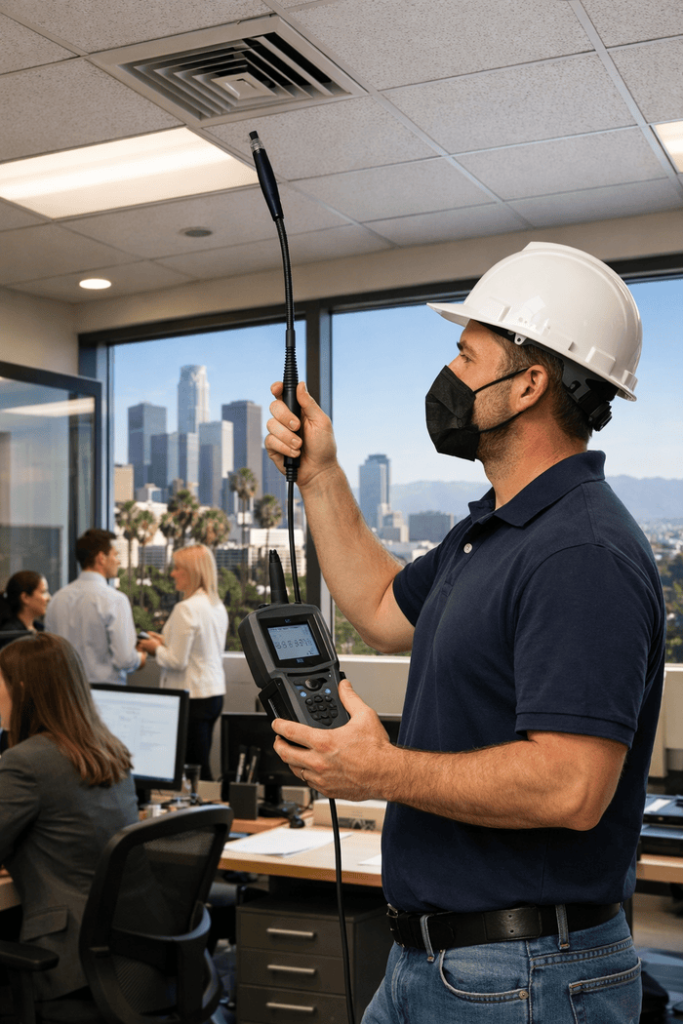
Ignoring the air quality in your commercial space can lead to significant problems for your staff and your business.
Increased risk of respiratory infections, allergies, asthma, and chronic diseases.
Lower concentration, memory, creativity, and decision-making skills among employees.
Higher rates of absenteeism, employee turnover, and potential liability costs.
Investing in clean air offers a substantial return.
Boosts employee efficiency, innovation, and morale.
Increases customer satisfaction and employee retention.
Can lead to lower energy consumption and reduced building maintenance costs.
Several sources can contribute to poor indoor air quality in a commercial building. Identifying them is the first step toward a solution.
Boilers, furnaces, water heaters, and generators that burn fuel can release harmful gases and particles.
Pressed wood products, carpets, adhesives, paints, and cleaners can release volatile organic compounds (VOCs) and other chemicals.
Dust, pollen, smoke, and vehicle exhaust can enter through windows, vents, and cracks in the structure.
Bacteria, viruses, mold, and dust mites thrive in damp or dirty areas like HVAC systems, bathrooms, or water-damaged materials.
Chemicals used to control pests can contaminate indoor air and pose health risks.
Choosing the right professional service is essential for accurate results. Here’s what to look for:
Ask for and contact former customers to verify their experience and satisfaction with the service. You can also check online reviews.
Get written estimates detailing the scope of work, fees, and testing methods. Beware of services that offer extremely low prices without a clear explanation of what's included.
A local provider will be more familiar with regional regulations and standards that apply to your building type.
Choose a provider you feel comfortable with. They should answer all your questions clearly and show genuine interest in helping you improve your indoor air quality.
Testing is the first step. Maintaining a healthy environment requires ongoing effort.
Bring fresh air into your spaces by opening windows or using mechanical ventilation like fans and vents. Use air purifiers to filter incoming air.
Choose low-emission or natural products for cleaning and furnishings. Ensure proper ventilation when using any chemicals.
Keep temperature between 68°F - 78°F and humidity between 30% - 60% to inhibit the growth of mold, bacteria, and dust mites.
Implement a routine cleaning schedule that includes vacuuming, dusting, and wiping surfaces to remove dust, allergens, and other pollutants.
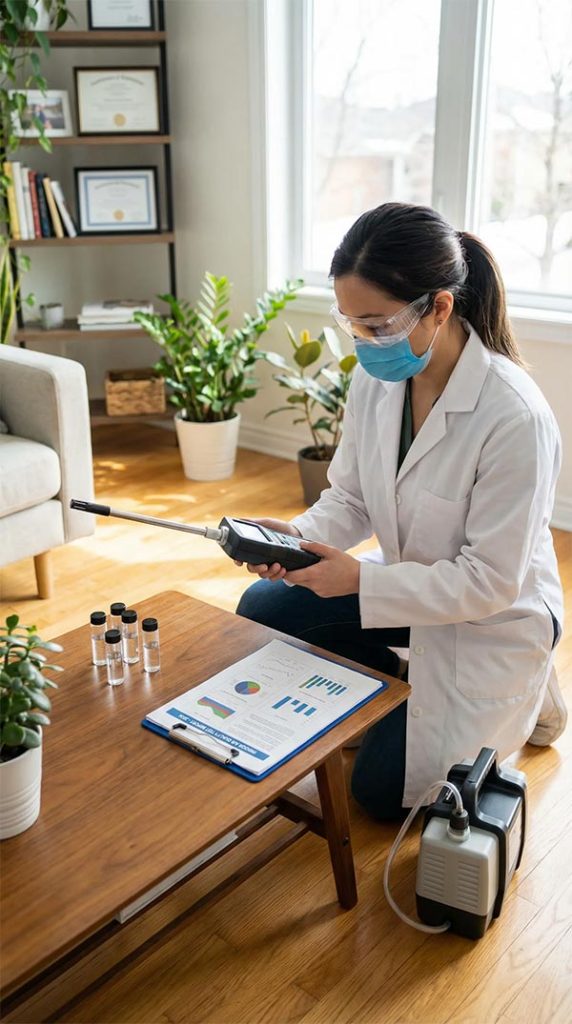
According to the EPA, three of the major indoor pollutants are:
Common symptoms include eye, nose, and throat irritation; headaches and drowsiness; coughing and sneezing; allergic reactions; and difficulty concentrating.
While there is no single standard, the World Health Organization (WHO) recommends that total VOC (TVOC) levels should not exceed 300 parts per billion (ppb). Different compounds have different exposure limits.
OSHA does not set specific standards for general indoor air quality (IAQ) but offers guidelines. They may investigate air quality complaints by identifying pollutant sources and measuring employee exposure to specific regulated contaminants.
Schedule a certified IAQ test today. We serve San Francisco, Los Angeles, and most of California — with fast turnaround, certified results, and expert guidance.