
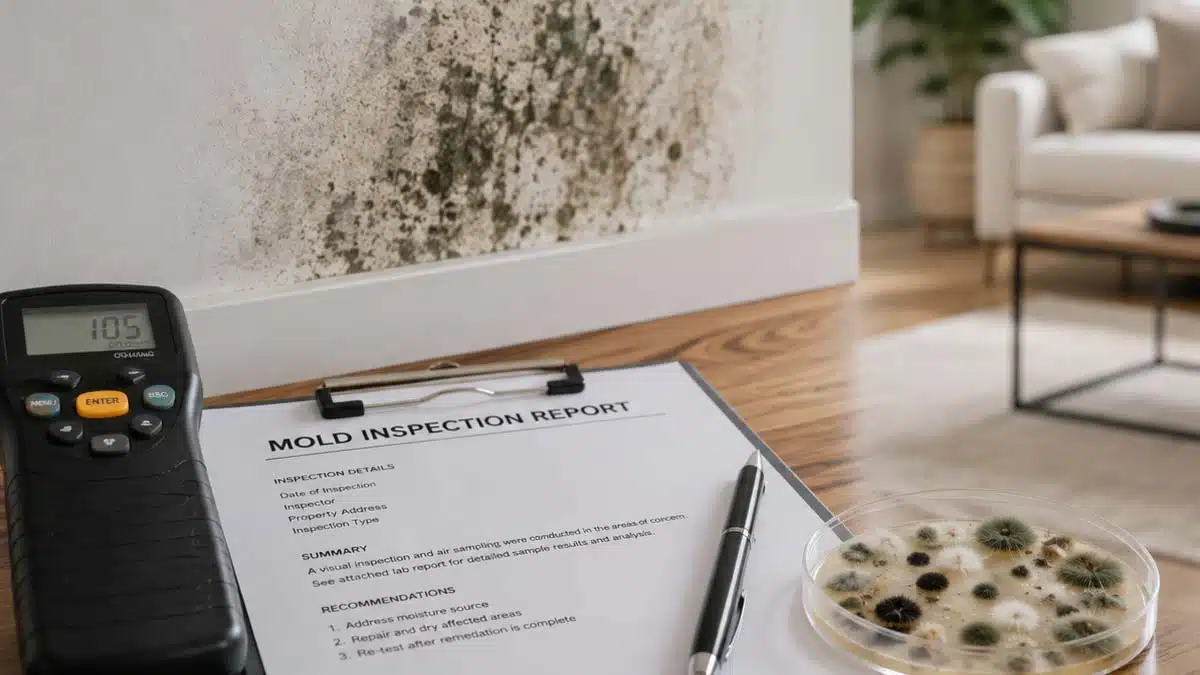
Here’s What You’re Really Paying For
If you’re asking, “How much does mold testing cost for a house?”, you’re probably dealing with a specific concern.
Maybe you noticed a musty smell. Maybe there was a recent plumbing leak or water damage. Or maybe you’re buying or selling a home and want to know exactly what you’re dealing with before moving forward.
As the owner of A-1 Certified Environmental Services, I’ve spent more than 20 years working in construction and environmental testing throughout California. One thing I’ve learned is that homeowners often focus on the price of mold testing before understanding what they should actually be getting for that money.
A good mold inspection should do more than tell you whether mold spores were found.
It should help answer a much more important question:
What is actually happening inside your home?
At A-1 Certified Environmental Services, our focus is independent environmental testing. We provide clear information so homeowners can make decisions based on actual findings instead of fear or guesswork.
There Isn’t One Price for Every Mold Inspection
One of the biggest misconceptions about mold testing is that every house should cost the same to inspect.
That simply isn’t realistic.
A small condominium with one area of concern is very different from a large two-story home with a crawlspace, attic, several bathrooms, and a history of water intrusion.
The cost of mold testing for a house can depend on several factors, including:
- The size of the property
- The number of areas being investigated
- The property’s history of water damage
- Whether air samples are needed
- Whether surface samples are appropriate
- The number of laboratory samples collected
- Moisture detection requirements
- Thermal imaging
- Accessibility of suspected problem areas
- The overall complexity of the investigation
That’s why I recommend asking what’s included before comparing prices.
A cheap mold test isn’t much of a bargain if you still don’t know what’s causing the problem when it’s finished.
What Should Professional Mold Testing Include?
A lot of homeowners think mold testing means someone comes to the house, sets up an air pump, collects a sample, and leaves.
Air sampling can be useful, but that’s only one part of a good investigation.
We want to understand why mold might be growing in the first place.
Mold needs moisture. So one of the most important parts of an inspection is looking for the source of that moisture.
Depending on the home and the situation, professional testing may include:
- A visual inspection
- Moisture measurements
- Thermal imaging
- Indoor air samples
- Outdoor comparison samples
- Surface sampling when appropriate
- Laboratory analysis
- A detailed written report
- Recommendations based on the findings
The laboratory data matters, but so does understanding what those numbers mean in the context of your home.
At A-1, our goal is to give you information you can actually use.
What Are You Really Paying For?
You’re not just paying for someone to collect samples.
You’re paying for experience.
A good environmental inspector needs to know where to look, what questions to ask, which areas deserve additional attention, and when testing is actually necessary.
For example, a water stain on a ceiling could be associated with a roof leak, plumbing issue, condensation problem, or an old leak that’s already been repaired.
Sampling alone doesn’t explain that.
The inspector has to put the pieces together.
That is often where experience becomes much more valuable than simply choosing the lowest-priced testing company.
The Cheapest Mold Test Can Become the Most Expensive
One of the biggest mistakes I see homeowners make is choosing a mold inspection based only on price.
I’ve had people call us after paying for another inspection because they received laboratory results but still had no idea what the results meant or where the moisture was coming from.
Now they’re paying for a second inspection.
Another thing I recommend asking is whether the testing company also performs mold remediation.
A-1 Certified Environmental Services provides independent environmental testing. We don’t make our money by finding a mold problem and then selling you the remediation work.
That separation matters to me.
If mold is present, I’ll tell you.
If the testing doesn’t support a major mold problem, I’ll tell you that too.
Sometimes the best result I can give a homeowner is confirmation that they don’t need thousands of dollars in unnecessary work.
A Real-World Example
One inspection has always stuck with me.
A homeowner contacted us after being told they had a major mold problem that could cost thousands of dollars to remediate.
They were understandably worried.
Instead of starting with the assumption that widespread mold was the problem, I treated the property like an investigation.
During the inspection, moisture detection pointed us toward a hidden plumbing leak.
The laboratory results did not indicate the widespread elevated mold conditions the homeowner had been led to expect.
The real issue was moisture from the plumbing leak.
Once the leak was corrected, the homeowner avoided spending thousands of dollars on remediation that wasn’t supported by the testing.
That’s exactly why independent testing is so important.
Sometimes the problem is mold.
Sometimes it’s something else.
Our job is to find out.
Is Professional Mold Testing Worth the Money?
When it’s done correctly, I believe it absolutely can be.
Professional mold testing may be especially valuable when:
- You’ve had water damage
- A plumbing or roof leak occurred
- You notice a persistent musty odor
- Mold keeps returning after cleaning
- You suspect hidden moisture
- You’re buying or selling a home
- You’re dealing with a landlord or tenant dispute
- You need documentation for an insurance matter
- You’re concerned about indoor air quality
- You need verification after remediation
Our article about mold and indoor air quality explains why mold concerns often involve much more than what you can see growing on a surface.
Not every small mold spot requires extensive testing.
But when the source or extent of the problem isn’t clear, professional testing can save you from making expensive decisions based on assumptions.
What Does Mold Testing Actually Tell You?
A thorough investigation should help answer questions such as:
- Is there evidence of an indoor mold problem?
- Are mold levels elevated compared with outdoor conditions?
- What types of mold were identified in the samples?
- Where is the likely moisture source?
- Is the problem localized or more widespread?
- Are additional areas worth investigating?
- Does professional remediation appear necessary?
- Is additional environmental testing appropriate?
That’s a lot more useful than simply being told, “Yes, mold was found.”
Mold exists naturally in the environment.
The real question is whether indoor conditions suggest a problem that needs to be addressed.
What About Health Concerns?
Homeowners often call us because someone in the house has been experiencing symptoms and they’re wondering whether mold could be involved.
Mold affects people differently, and symptoms can have many possible causes.
Some people report irritation, coughing, congestion, allergy-like symptoms, or worsening asthma when indoor environmental conditions are poor. Others may experience no noticeable symptoms at all.
Our article Can Mold Make You Sick? What Health Issues Should I Know About? goes into more detail about common concerns associated with mold exposure.
An environmental inspector can evaluate the property, but medical symptoms should always be discussed with a qualified healthcare professional.
Mold Testing During a Real Estate Transaction
Mold testing can also be extremely useful when buying or selling a home.
Maybe the home inspector notices staining under a sink.
Maybe there’s evidence of an old roof leak.
Or perhaps the buyer notices a musty smell in one room.
Nobody wants a real estate deal delayed because everyone is guessing about whether there’s a serious mold problem.
Independent testing can provide documentation that helps buyers, sellers, agents, and other parties understand the actual condition of the property.
It can also help prevent a small moisture issue from automatically being treated like a major mold problem.
What If Mold Remediation Has Already Been Completed?
If you’ve already paid for professional mold remediation, the next question is:
Did the remediation actually work?
That’s where post-remediation mold clearance testing becomes important.
Clearance testing is performed after the remediation work has been completed. The goal is to independently evaluate conditions in the treated area before reconstruction or normal occupancy resumes.
A-1 provides professional mold clearance testing for homeowners, property managers, real estate professionals, and businesses.
I strongly prefer the testing company to be independent from the company that performed the remediation.
You want the person checking the work to have no financial interest in whether more remediation is recommended.
Don’t Forget About Indoor Air Quality
Sometimes mold isn’t the only possible problem.
Musty odors, respiratory irritation, unusual smells, or discomfort inside a home can be associated with several indoor environmental conditions.
Depending on the situation, testing may also look at broader indoor air quality concerns.
A-1 provides mold testing along with indoor air quality and other environmental testing services throughout California.
This becomes especially useful when the homeowner knows something is wrong but isn’t sure mold is the cause.
Questions to Ask Before Hiring a Mold Testing Company
Before choosing an inspector based only on the quoted price, ask a few questions.
Ask:
- What does the inspection include?
- How many areas will be evaluated?
- Are laboratory fees included?
- Will you use moisture detection equipment?
- Is thermal imaging available when appropriate?
- Will I receive a written report?
- Will someone explain the laboratory results?
- Do you perform mold remediation?
- Are there additional fees for extra samples?
Those answers give you a much better picture of the value you’re receiving.
A $200 inspection and a $600 inspection may sound very different until you discover that one includes a comprehensive investigation, laboratory analysis, moisture evaluation, and reporting while the other includes only a basic sample.
Compare the service, not just the number.
So, How Much Does Mold Testing Cost for a House?
The most accurate answer is:
It depends on the house and what needs to be investigated.
The size of the property, number of samples, suspected moisture problems, areas of concern, and laboratory requirements all affect the final cost.
Rather than trying to find the cheapest possible mold test, I recommend finding out exactly what’s included and whether the company is truly independent.
You’re paying for more than a lab sample.
You’re paying for someone to investigate the property, interpret what they’re seeing, and help you understand what should happen next.
That’s where professional mold testing provides its real value.
My Advice to Homeowners
If you’re concerned about mold, don’t immediately assume the worst.
And don’t let someone scare you into an expensive remediation project before you understand what’s actually happening.
Start with information.
A thorough, independent environmental inspection can help you determine whether there’s a significant mold problem, identify likely moisture sources, and decide what steps make sense from there.
Sometimes testing confirms that remediation is necessary.
Sometimes it identifies a smaller moisture problem.
And sometimes it tells you that the situation isn’t nearly as serious as you feared.
Either way, good information puts you in control.
Need a Mold Inspection?
A-1 Certified Environmental Services provides independent mold testing, mold clearance testing, indoor air quality testing, and other environmental testing services throughout California. The company serves homeowners, buyers, sellers, landlords, property managers, and commercial properties.
If you’re wondering how much mold testing costs for your house, the best way to get an accurate answer is to discuss your property and areas of concern with us.
Call A-1 Certified Environmental Services at 888-217-2719 to discuss your situation or schedule an inspection.
Frequently Asked Questions
How much does mold testing cost for a house?
There isn’t one price that applies to every property. Cost depends on factors such as the size of the home, number of areas being investigated, number of samples, laboratory analysis, and the complexity of the inspection.
Is mold testing worth the cost?
It can be, particularly when you’re dealing with unexplained odors, previous water damage, suspected hidden mold, a real estate transaction, or uncertainty about whether remediation is necessary.
What is included in professional mold testing?
A professional inspection may include visual evaluation, moisture detection, thermal imaging, air or surface sampling, laboratory analysis, and a written report depending on the property’s needs.
Should a mold testing company also perform remediation?
Using an independent testing company can reduce potential conflicts of interest because the inspector doesn’t make additional money by recommending a larger remediation project.
Do I need mold clearance testing after remediation?
Clearance testing can be useful after professional mold remediation because it independently evaluates conditions in the treated area and helps determine whether the remediation was successful.
Can mold testing identify the source of the problem?
Testing is only part of the investigation. An experienced inspector also looks for moisture sources and building conditions that may explain why mold is growing in the first place.