Professional IAQ testing across San Francisco, Los Angeles, and California. Identify mold, VOCs, allergens — with certified results you can act on.

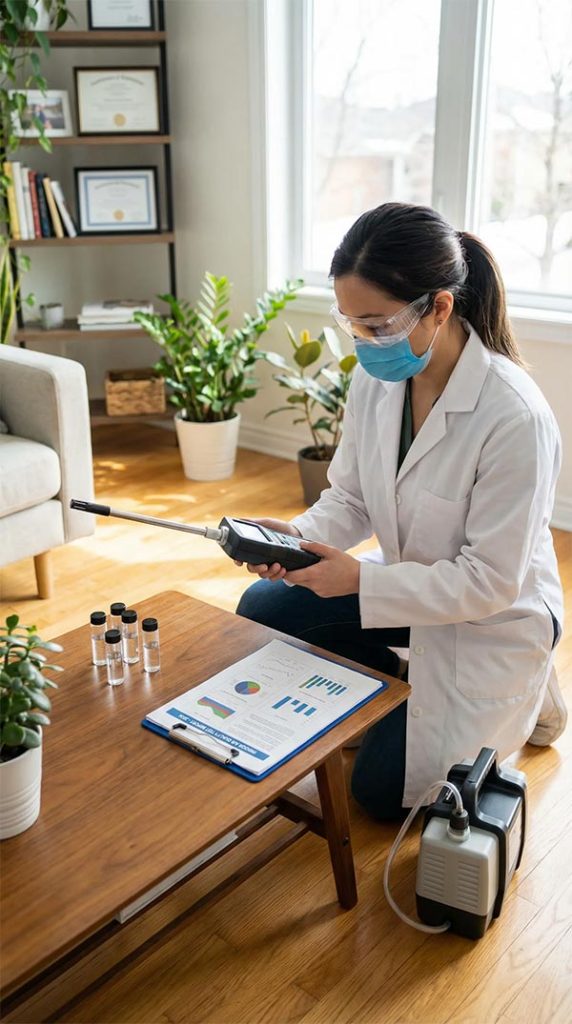
Indoor air quality testing measures and analyzes pollutants, contaminants, and allergens within a building’s air. Testing identifies sources of pollution like mold spores, dust mites, chemicals, and VOCs.
It also evaluates your ventilation, filtration, and humidification systems — giving you a clear picture of the air your family or employees breathe every day.
The EPA ranks indoor air pollution as one of the top five environmental risks to public health. Our certified testing covers San Francisco, Los Angeles, San Jose, Oakland, Sacramento, and all of California.
We are a full-service Certified Environmental Testing business. In addition to IAQ Testing, we also provide Mold Testing and VOC Testing across California.
Poor indoor air quality impacts your health, productivity, and wallet. Here’s what regular testing can do for you.
Poor IAQ can cause or worsen asthma, allergies, respiratory infections, headaches, and serious diseases like lung cancer and COPD. Testing is your first line of defense.
The WHO estimates improved air quality can increase workplace productivity by up to 10%. Poor IAQ negatively affects memory, attention, and decision-making.
Poor IAQ damages building structures and equipment, driving up maintenance and energy costs. Good air quality extends the lifespan of your building.
Testing pinpoints hidden contamination sources — from building materials to combustion appliances — so they can be eliminated or controlled.
IAQ testing evaluates HVAC, filtration, and humidification systems to help maintain ideal temperature and humidity levels.
Ensure compliance with OSHA, EPA, and ASHRAE standards — protecting employees, tenants, and reducing liability exposure.
Real numbers behind why IAQ testing matters — and how ventilation impacts your environment.
| Pollutant | Indoor | Outdoor | Change |
|---|---|---|---|
| CO₂ | 600 | 400 | +50% |
| PM2.5 | 15 | 25 | −40% |
| VOCs | 200 | 50 | +300% |
| Method | Temp | Humidity | PPM |
|---|---|---|---|
| Air Purifiers | 23°C | 45% | 5 |
| Open Windows | 22°C | 50% | 10 |
| Using Fans | 24°C | 55% | 15 |
| No Ventilation | 26°C | 60% | 20 |
We offer a comprehensive suite of certified tests to measure different pollutants and environmental parameters.
Measures tiny particles — dust, pollen, smoke, and soot — in PM10, PM2.5, and PM1. Smaller particles penetrate deeper into lungs and cause greater health risks.
Detects harmful chemicals from paints, solvents, cleaners, furniture, and carpets. VOCs cause irritation, headaches, dizziness, and in extreme cases organ damage.
Measures formaldehyde — a common VOC in building materials — which causes respiratory irritation, throat discomfort, and increased cancer risk over time.
Detects the type and amount of mold spores in air and on surfaces. Mold thrives in humid conditions and causes allergic reactions, asthma attacks, and infections.
Identifies dust mites, pet dander, cockroach droppings, pollen, and smoke — common triggers for allergic reactions and breathing difficulties.
Monitors ideal indoor temp (68°F–78°F) and humidity (30–50%). Imbalances foster mold growth and affect overall indoor air quality.
Every IAQ report follows a clear 4-part structure so you can understand results and take meaningful action.
Beyond testing, here are proven strategies to maintain healthy indoor air quality long-term.
Open windows and doors regularly. Install exhaust fans in kitchens and bathrooms to remove moisture and odors.
Vacuum carpets and rugs to remove dust and allergens. Wipe surfaces with a damp cloth and wash bedding frequently.
Maintain 30–50% indoor humidity to prevent mold growth. Use a dehumidifier in humid areas and fix leaks promptly.
Select paints, solvents, cleaners, and pesticides labeled as low or no-VOC. Follow proper use and disposal instructions.
Change HVAC filters every 1–3 months. Consider UV lights in your HVAC system to eliminate bacteria and viruses.
Improving indoor air quality delivers measurable benefits across physical and mental health.
Reducing exposure to VOCs and fine particles lowers the risk of lung cancer, cardiovascular disease, and other serious long-term conditions.
Reducing allergens, mold spores, and airborne particles lessens inflammation and allergic reactions, allowing your immune system to function at full capacity.
Poor IAQ causes headaches, drowsiness, and memory issues. Improving air quality enhances mood, creativity, and cognitive performance for everyone indoors.
Good indoor air eliminates unpleasant odors, dryness, stuffiness, and temperature swings — creating a genuinely comfortable environment.
Common questions about indoor air quality and what our testing services can do for you.
Symptoms include sore eyes, nose, and throat irritation, headaches, dizziness, fatigue, allergic reactions, asthma attacks, respiratory infections, chronic lung disease, and increased risk of heart disease or cancer. If you experience these regularly at home or work, IAQ testing is strongly recommended.
According to the EPA: (1) Secondhand smoke — linked to cancer and respiratory illness; (2) Combustion pollutants — gases and particles from burning wood, gas, or oil; (3) VOCs — volatile organic compounds from paints, cleaners, and solvents.
OSHA does not conduct air quality testing directly. Instead, it sets standards and guidelines for employers to protect employees from harmful pollutant exposure. Professional certified testing services like ours provide the actual testing.
Absolutely. Poor indoor air quality can lead to Sick Building Syndrome, Building-Related Illness, and Multiple Chemical Sensitivity. Children are especially vulnerable, with risks including ear infections, respiratory infections, and developmental issues.
Symptoms include sneezing, coughing, wheezing, runny nose, itchy eyes, skin rash, sinusitis, and asthma attacks. Toxic mold species can cause fever, headaches, memory loss, nausea, and in severe cases lung bleeding or organ damage.
Air purifiers reduce airborne mold spores and help prevent their spread, but cannot eliminate mold sources from surfaces. They should be combined with fixing water leaks, cleaning moldy areas, and using dehumidifiers.
Schedule a certified IAQ test today. We serve San Francisco, Los Angeles, and most of California — with fast turnaround, certified results, and expert guidance.