
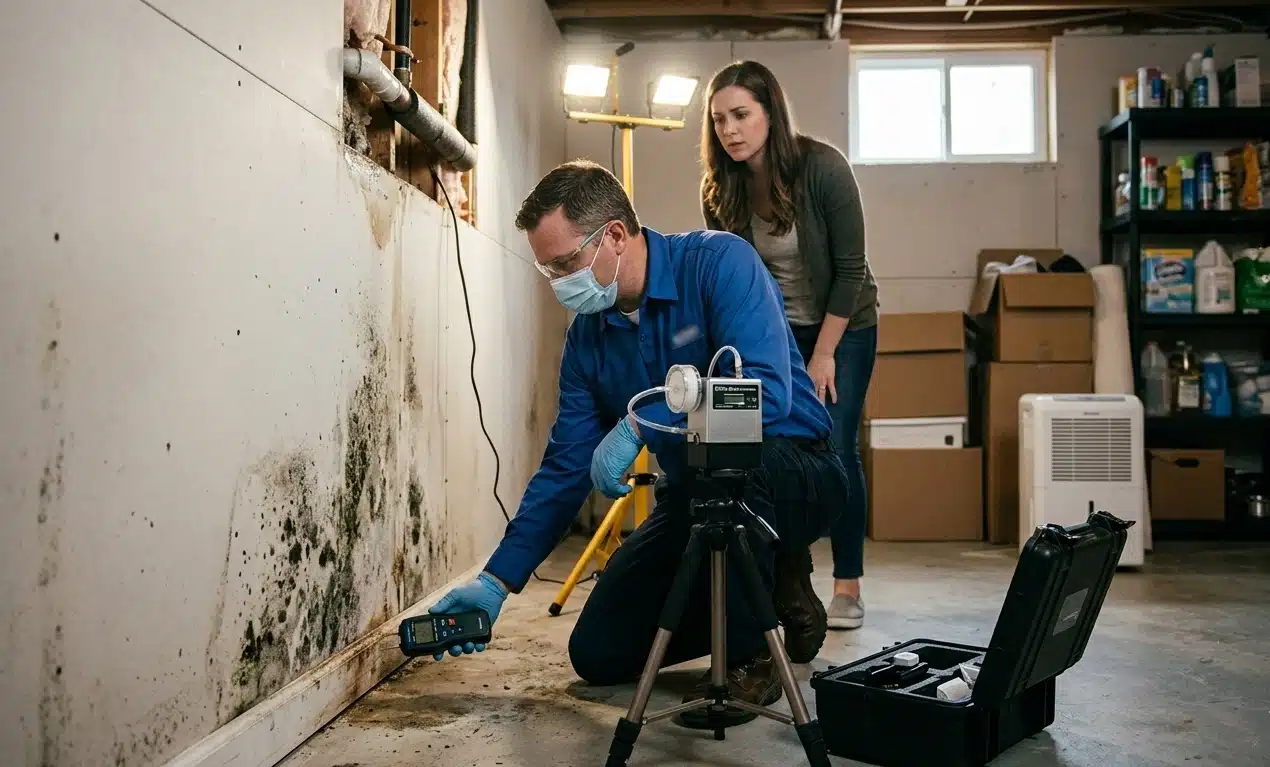
Why Mold Identification Matters
Mold thrives in damp, humid, and poorly ventilated environments. When mold grows indoors, it releases microscopic spores into the air that can spread throughout a property. For some individuals, exposure to elevated mold levels may contribute to allergy symptoms, respiratory irritation, or other health concerns.
Proper mold identification is important because not all molds present the same level of concern. Professional mold testing helps determine the type of mold present, the concentration of airborne spores, and whether hidden mold growth may exist. In many cases, homeowners discover mold problems while investigating concerns about their indoor air quality testing results.
Without testing, it can be difficult to determine whether a mold issue is cosmetic, widespread, or hidden behind walls, ceilings, flooring, or HVAC systems.
How Professional Mold Testing Works
A professional mold inspection goes beyond what is visible to the naked eye. Mold testing helps identify hidden growth and provides valuable information about indoor air quality.
Common testing methods include:
Air Sampling
Air samples measure airborne mold spores throughout the property and help determine whether indoor spore levels are elevated compared to outdoor conditions.
Surface Sampling
Swab, tape-lift, or bulk samples can be collected from visible growth or suspected contamination areas for laboratory analysis.
Bulk Material Sampling
In some situations, portions of drywall, insulation, carpet, or other building materials may be submitted for testing to determine the extent of contamination.
Professional laboratory analysis provides accurate identification of mold species and concentrations, allowing for informed remediation decisions.
Benefits of Professional Mold Testing
Professional testing provides valuable information that can help property owners make informed decisions regarding their indoor environment. Many homeowners researching environmental concerns also want to understand indoor air quality testing costs in California before scheduling services.
Benefits of professional mold testing include:
- Accurate mold identification
- Detection of hidden mold growth
- Assessment of indoor air quality
- Documentation for insurance claims
- Guidance for remediation efforts
- Peace of mind for occupants
Testing is particularly beneficial for households with children, older adults, individuals with allergies, or anyone concerned about indoor environmental quality.
Conclusion
Mold is a common environmental issue that can affect both residential and commercial properties. While not all mold is considered hazardous, certain species may impact indoor air quality and indicate underlying moisture problems that require attention.
Professional mold testing provides accurate identification, detects hidden contamination, and helps property owners make informed decisions about remediation and prevention. By addressing mold issues early, you can protect your property, improve indoor air quality, and create a healthier environment for everyone who lives or works there.
If you suspect mold growth in your home or business, professional testing can provide the answers and guidance needed to move forward with confidence.