
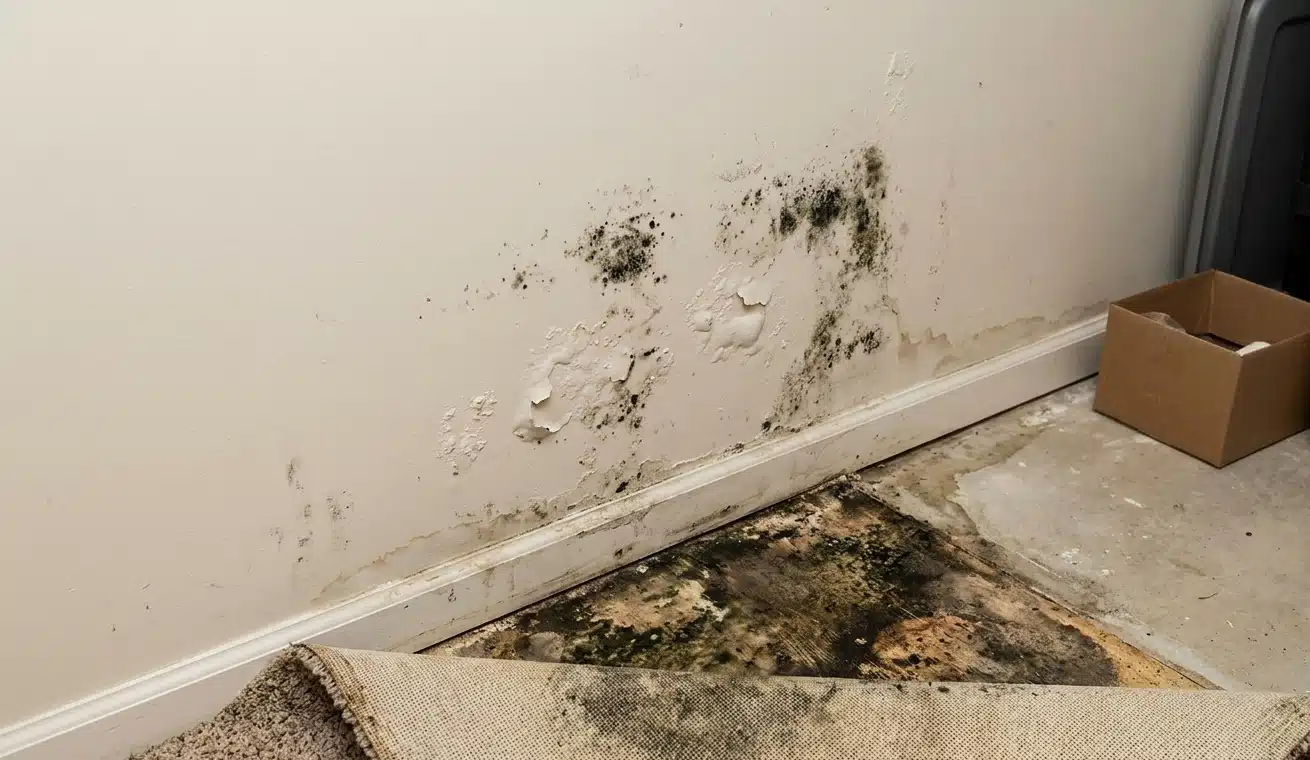
Sometimes mold is obvious. You see dark spots growing around a window or discover mold underneath a bathroom sink.
Other times, you know something isn’t right, but you can’t figure out what it is.
Maybe there’s a musty smell that keeps coming back. Perhaps you’ve noticed water stains on a ceiling, bubbling paint, or a room that always feels damp.
These can all be warning signs of a moisture problem and possible mold growth.
Knowing how to tell if you have mold in your home can help you catch a problem before it spreads into walls, flooring, cabinets, or other areas that are much more difficult and expensive to address.
At A-1 Certified Environmental Services, we provide independent mold inspections and testing to help homeowners determine whether mold is present and better understand what’s happening inside their property.
Here’s what you should be watching for.
What Are the First Signs of Mold in a House?
One of the challenges with mold is that you may notice something is wrong before you actually see it.
There isn’t one warning sign that automatically means you have mold, but several clues should get your attention.
Common signs include:
- Persistent musty or earthy odors
- Visible spots or unusual discoloration
- Water stains on walls or ceilings
- Bubbling or peeling paint
- Warped flooring
- Damp or humid rooms
- Condensation around windows
- Previous leaks or flooding
- Recurring moisture problems
- Mold that returns after cleaning
The more of these signs you notice, the more reason you have to investigate.
Our article about where mold hides in homes explains some of the less obvious places where moisture and mold problems can develop.
What Does Mold Smell Like in a House?
This is one of the most common questions homeowners ask.
People usually describe mold odors as:
Musty. Damp. Earthy. Stale.
It can smell like a basement, wet cardboard, damp clothing, or something that’s been stored too long in a humid environment.
What makes the smell particularly important is when you can’t find the source.
For example, you walk into a bedroom and consistently notice a musty smell, but there’s no visible mold anywhere.
That doesn’t prove mold is present.
But it does give you a reason to investigate further.
Pay attention to whether the smell becomes stronger near a particular wall, cabinet, closet, bathroom, or flooring area.
Your nose can tell you something may be wrong, but it can’t tell you exactly what’s causing the odor.
Visible Mold Isn’t Always Black
When homeowners think about mold, they often picture large patches of black mold.
Mold doesn’t always look like that.
Depending on the organism and conditions, suspected mold growth may appear:
- Black
- Green
- White
- Gray
- Brown
- Yellow
The texture can also vary.
Some growth appears powdery or fuzzy. Other areas may look like small spots or irregular discoloration.
You shouldn’t try to determine the type of mold based only on its color.
A dark spot isn’t automatically “toxic black mold,” and you generally can’t identify a mold species accurately just by looking at it.
Laboratory analysis is a much more reliable way to identify mold when identification is necessary.
How to Know If Mold Is Growing Behind Walls
Hidden mold can be more difficult to identify because the visible surface may look relatively normal.
But there are warning signs.
One of the biggest is evidence of moisture.
Watch for:
- Bubbling paint
- Peeling wallpaper
- Soft drywall
- Discoloration
- Water stains
- Warped baseboards
- Dampness
- Musty odors concentrated near a wall
If a plumbing line has been leaking inside a wall, mold may develop without becoming visible on the room side of the drywall.
The same can happen around windows, roofs, bathrooms, showers, and exterior walls.
This is why fixing the water source is so important.
Cleaning visible mold doesn’t solve the problem if water is still getting into the building.
Don’t Ignore Previous Water Damage
If your home recently experienced a leak, flood, roof problem, overflowing appliance, or other water event, pay attention to the affected area even after everything appears dry.
Moisture can travel into places you can’t easily see.
Water may reach:
- Wall cavities
- Insulation
- Subflooring
- Carpet padding
- Cabinets
- Baseboards
- Ceiling cavities
The surface may dry while moisture remains trapped underneath or behind it.
If you’re concerned after a water event, our article explaining how to test for mold in your home provides more information about professional mold inspections and testing.
Can Mold Affect Indoor Air Quality?
Mold doesn’t necessarily stay in one visible spot.
Spores and particles can become airborne, particularly when contaminated materials are disturbed.
Air movement and HVAC systems can also move particles around a building.
This is one reason mold investigations and indoor air quality concerns often overlap.
Professional air sampling may be useful in certain situations when a homeowner suspects a problem but can’t see where it’s coming from.
Testing can provide additional information about conditions inside the home instead of relying entirely on appearance and smell.
What About Mold in the Bedroom?
Finding suspected mold in a bedroom can be particularly concerning because you spend so much time there.
Start by looking for moisture.
Check around:
- Windows
- Exterior walls
- Closets
- Ceilings
- Air vents
- Baseboards
- Areas behind furniture
Furniture placed tightly against an exterior wall can sometimes reduce airflow and create conditions where condensation develops.
A roof leak above the bedroom or moisture entering around a window can also create hidden problems.
If you see dark discoloration, don’t automatically assume it’s “toxic black mold.”
Color alone isn’t enough to determine what type of mold you’re looking at.
If you’re concerned about what it is, professional sampling and laboratory analysis can provide much more reliable information.
Mold Symptoms Aren’t a Mold Test
Some homeowners first become concerned about mold because they experience coughing, sneezing, eye irritation, congestion, or other symptoms while inside the house.
These symptoms can have many possible causes.
Mold may be one possibility, but so are dust, pollen, pet allergens, VOCs, smoke particles, and other indoor environmental factors.
That’s why symptoms alone shouldn’t be used to diagnose a mold problem.
If something about the indoor environment seems to be bothering you, it may be worth investigating the property rather than assuming mold is automatically responsible.
Our article about 12 warning signs your home’s air quality may be affecting you discusses some of the broader indoor environmental warning signs homeowners may notice.
If you have persistent or concerning health symptoms, discuss them with a qualified healthcare professional.
Why Mold Keeps Coming Back After Cleaning
This is one of the biggest clues that you may have a larger problem.
You clean the mold.
A few weeks later, it’s back.
You clean it again.
And it returns again.
At that point, stop focusing only on the mold.
Look for the moisture.
Mold needs moisture to grow. If the underlying source hasn’t been corrected, cleaning the surface may only provide a temporary cosmetic improvement.
Recurring mold could be associated with:
- Plumbing leaks
- Roof leaks
- Window leaks
- Poor bathroom ventilation
- Condensation
- Excessive humidity
- Drainage problems
- Previous water damage
Finding and correcting that moisture source is essential if you want to keep the problem from returning.
Should You Test Mold Yourself?
Home mold test kits are readily available, but the results can sometimes create more questions than answers.
Mold spores naturally exist in the environment, so simply detecting mold doesn’t necessarily tell you whether there is a significant indoor problem.
Professional mold testing considers the property, moisture conditions, visible observations, sampling locations, and laboratory results together.
The context matters.
That’s one of the biggest advantages of having an experienced environmental professional evaluate the property.
When Should You Call a Professional Mold Inspector?
Not every small spot requires an extensive mold investigation.
But there are situations where professional inspection makes sense.
Consider calling a professional when:
- You smell mold but can’t find it
- Mold keeps returning after cleaning
- There has been significant water damage
- You suspect mold behind walls
- Multiple rooms appear affected
- You’re purchasing a home with a history of moisture problems
- You’re involved in a landlord-tenant mold dispute
- You need documentation for an insurance claim
- You’re concerned about indoor air quality
- You simply aren’t sure how extensive the problem is
An independent inspection can help you understand what you’re dealing with before you start removing walls or paying for remediation.
Mold Testing and Mold Remediation Are Different
This is an important distinction.
Mold testing identifies and evaluates the problem.
Mold remediation addresses the contamination.
A-1 Certified Environmental Services specializes in independent mold inspections, mold testing, indoor air quality testing, and post-remediation clearance testing.
We don’t perform the remediation itself.
That separation means our job is to provide information about the environmental condition of your property, not to sell you a remediation project.
If significant mold is found, you can use those findings to determine the appropriate next steps.
After Mold Removal, How Do You Know It’s Gone?
If your home requires professional mold remediation, there is one more step worth considering.
Post-remediation clearance testing.
Clearance testing is performed after the remediation company has completed its work.
An independent environmental testing company can evaluate the treated area and, depending on the situation, perform air or surface sampling.
This helps provide information about conditions after remediation instead of simply assuming the work was successful.
How to Prevent Mold From Growing in Your Home
Mold prevention is mostly about moisture control.
You can’t eliminate every mold spore from your environment, but you can make your home less inviting for mold growth.
Start with a few basics:
- Repair plumbing leaks quickly
- Address roof and window leaks
- Use bathroom exhaust fans
- Vent moisture-producing appliances properly
- Watch for condensation
- Keep indoor humidity under control
- Dry wet materials as quickly as possible
- Investigate recurring water stains
- Don’t ignore persistent musty odors
The earlier you catch a moisture problem, the easier it usually is to address.
How to Tell If You Have Mold in Your Home
The most important thing to remember is that mold isn’t always obvious.
Sometimes you’ll see it.
Sometimes you’ll smell it.
And sometimes the only clue is a history of water damage or moisture in an area where mold could be growing out of sight.
Don’t panic if you find something suspicious.
But don’t ignore it either.
Look for the moisture source, document what you’re seeing, and get professional testing when the situation isn’t clear.
Knowing what’s actually happening is much better than guessing.
Need Help Determining If You Have Mold?
A-1 Certified Environmental Services provides independent mold inspections, mold testing, indoor air quality testing, and post-remediation clearance testing throughout California.
If you’ve noticed a musty smell, recurring mold, water damage, or other signs of a potential mold problem, we can help determine what’s happening inside your property.
Call A-1 Certified Environmental Services at 888-217-2719 to discuss your situation or schedule an inspection.
Frequently Asked Questions
What are the first signs of mold in a house?
Common warning signs include persistent musty odors, visible discoloration, water stains, peeling paint, damp areas, and mold that repeatedly returns after cleaning.
What does mold smell like?
Mold odors are commonly described as musty, damp, earthy, or stale. A persistent odor without an obvious source may be worth investigating.
Can mold grow behind walls?
Yes. Moisture from plumbing leaks, roof leaks, condensation, or previous water damage can create conditions for mold growth inside wall cavities.
Is black mold always dangerous?
You can’t determine a mold’s species or potential health significance based solely on color. Dark-colored mold isn’t automatically a particular species. Professional sampling and laboratory analysis can provide more reliable identification when needed.
How can I confirm whether I have mold?
A professional mold inspection can evaluate moisture conditions, visible evidence, and other factors. Air or surface samples may also be collected and analyzed by a laboratory when appropriate.
How can I prevent mold in my home?
Focus on moisture control. Repair leaks promptly, improve ventilation, control indoor humidity, dry wet materials quickly, and investigate recurring water or condensation problems.