
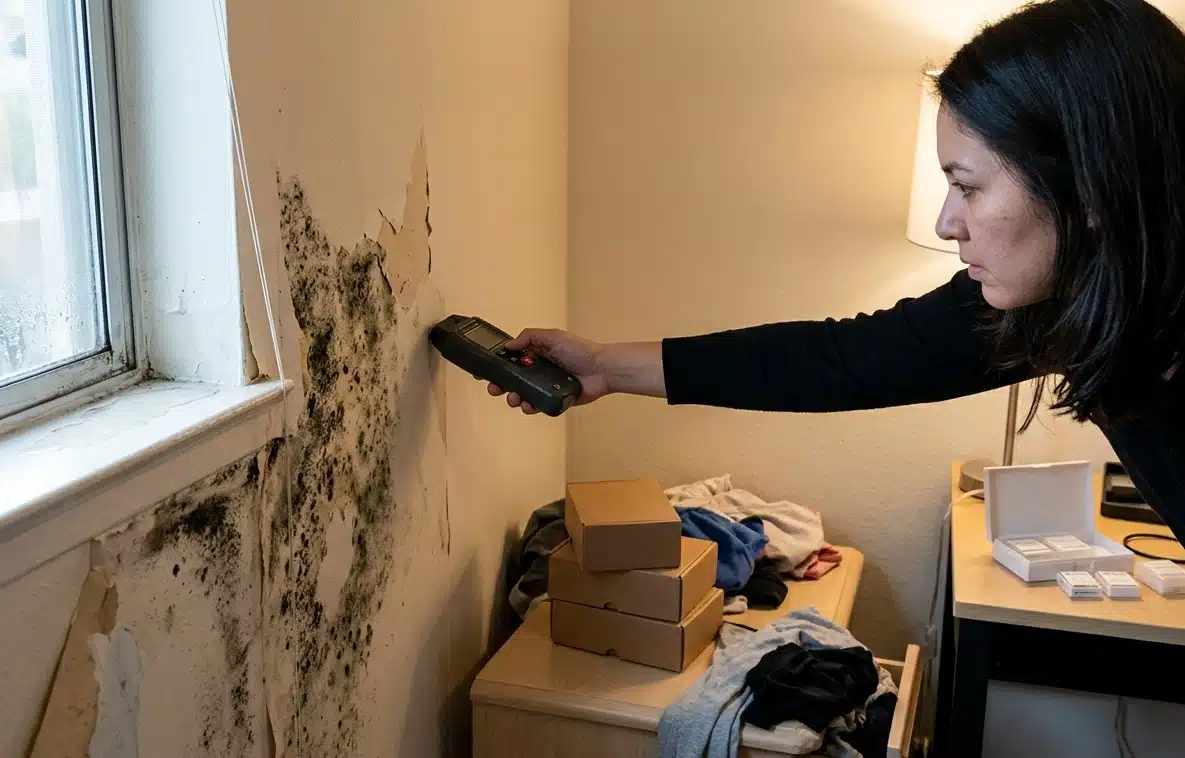
You notice a musty smell in your apartment. Then you find dark spots around a window or underneath the bathroom sink.
Now what?
For California renters, discovering mold can quickly raise questions about health, repairs, responsibility, and tenant rights. For landlords, a mold complaint can be equally concerning, especially when the source isn’t immediately obvious.
The important thing is not to ignore it.
Mold in rental properties in California can be connected to plumbing leaks, roof problems, poor ventilation, excessive humidity, previous water damage, or other moisture issues.
At A-1 Certified Environmental Services, we provide independent mold inspections and testing that can help tenants, landlords, and property managers better understand what’s happening inside a rental property.
This article provides general information about mold in California rentals. It isn’t intended to replace legal advice regarding a specific landlord-tenant dispute.
Mold in Rental Properties California: Who Is Responsible?
One of the first questions people ask is:
Who is responsible for the mold, the landlord or the tenant?
There isn’t one answer that applies to every situation.
The cause of the moisture problem matters.
If mold develops because of a leaking roof, plumbing failure, building defect, or another maintenance issue that falls under the property owner’s responsibility, the landlord may be responsible for correcting the underlying condition.
On the other hand, circumstances can become more complicated if a tenant’s actions contributed to excessive moisture or property damage.
This is one reason documentation is so important.
Before arguing about who’s responsible, it helps to determine what is causing the moisture and whether mold contamination is actually present.
California Tenants Have a Right to Habitable Housing
California landlords generally have a legal responsibility to maintain rental properties in a condition suitable for occupancy.
Mold can become part of a habitability issue when moisture or contamination creates unsafe living conditions.
But simply seeing something dark on a wall doesn’t necessarily tell you the extent of the problem.
Is it mold?
Where is the moisture coming from?
Is the problem limited to one surface?
Could there be additional growth behind the wall?
These are questions that may require professional investigation.
If you’re trying to determine whether you may have a mold problem, our article about signs of mold in your house explains several common warning signs.
What Should a Tenant Do After Finding Mold?
If you discover suspected mold in your rental property, don’t just clean it and forget about it.
Start documenting what’s happening.
Take photographs of visible mold, water stains, leaks, damaged materials, or other evidence of moisture.
Then notify your landlord or property manager.
Whenever possible, put the notification in writing so there is a record of when the problem was reported.
Include basic information such as:
- Where you found the suspected mold
- When you first noticed it
- Whether there is an active leak
- Whether the area has experienced previous water damage
- Whether the problem is getting worse
- Whether you’ve previously reported the issue
Keep copies of emails, maintenance requests, photographs, and other correspondence.
Good documentation can help both tenants and landlords understand the timeline and resolve the problem more efficiently.
What Should a Landlord Do When Mold Is Reported?
Ignoring a mold complaint usually isn’t a good strategy.
The first priority should be determining where the moisture is coming from.
If there is an active plumbing leak, roof leak, drainage problem, or another source of water intrusion, that issue should be investigated and addressed.
Simply painting over discoloration doesn’t solve an underlying moisture problem.
Neither does repeatedly cleaning the same area if the moisture source hasn’t been corrected.
Depending on the circumstances, an independent mold inspection or testing may also be appropriate.
This can help determine whether mold contamination is present and provide documentation of the property’s condition.
How Long Does a California Landlord Have to Address Mold?
You’ll often see websites give a specific number of days for landlords to fix mold.
The reality is more complicated.
California generally looks at whether necessary repairs were made within a reasonable period of time, and what is reasonable can depend on the seriousness and circumstances of the problem.
An active water leak creating additional damage, for example, may require much faster attention than a minor maintenance issue.
For both landlords and tenants, the best approach is to communicate quickly and document the problem rather than allowing it to continue getting worse.
Why Independent Mold Testing Can Help
Disagreements often begin because the tenant and landlord see the situation differently.
The tenant may believe there is a serious mold problem.
The landlord may believe it’s only minor surface discoloration.
Neither side really knows without additional information.
That’s where an independent mold inspection can be valuable.
A-1 Certified Environmental Services specializes in mold inspections and testing. We do not perform the mold remediation itself.
That distinction is important in rental disputes.
Our job isn’t to sell the landlord an expensive remediation project or tell the tenant that the property needs unnecessary work.
Our job is to evaluate the environmental condition and provide information based on what we find.
If you’d like to understand the testing process better, read our article about how to test for mold in your home.
What If Mold Is Hidden?
Mold isn’t always growing somewhere you can easily see.
It may be behind drywall, underneath flooring, inside cabinets, around plumbing, in attics, or in other concealed areas.
Sometimes the first warning sign isn’t visible mold at all.
It’s a smell.
A persistent musty odor can be a reason to investigate further, especially if the property has experienced a previous leak or water damage.
This is one reason wiping down visible mold doesn’t always solve the problem.
You have to determine why it’s growing.
Mold and Indoor Air Quality in Rental Properties
Mold concerns aren’t limited to what you see growing on a wall.
Indoor environmental conditions can also involve airborne particles, moisture, ventilation, allergens, VOCs, and other contaminants.
Rental properties can be particularly challenging because tenants may not know the complete history of the building.
There may have been previous leaks, flooding, repairs, or mold remediation before the current tenant moved in.
If you are experiencing unusual indoor conditions, our article covering 12 warning signs your home’s air quality may be affecting you provides additional information about possible indoor air quality concerns.
What Happens If Mold Remediation Is Needed?
If an inspection identifies a significant mold problem, the next step may involve professional remediation.
Remediation and mold testing are two different services.
Testing helps determine what’s happening.
Remediation addresses the affected materials and contamination.
A qualified remediation company may use containment, filtration, removal of affected materials, detailed cleaning, and other procedures depending on the situation.
But there’s another step landlords and tenants should consider after the remediation is finished.
Mold Clearance Testing After Remediation
How do you know whether the remediation actually worked?
That’s where post-remediation mold clearance testing can be valuable.
An independent environmental testing company can evaluate the treated area after the remediation company has completed its work.
Depending on the situation, this may involve visual evaluation, air sampling, surface sampling, and laboratory analysis.
Our article about the difference between mold testing and mold clearance testing explains why these two types of testing serve different purposes.
For landlords, clearance testing can provide useful documentation.
For tenants, it can provide additional information about the condition of the property before returning to the affected area.
Does a Landlord Have to Disclose Mold in California?
California has specific requirements concerning known mold conditions and disclosures in certain circumstances.
However, exactly what must be disclosed can depend on the facts of the situation and the applicable laws.
From a practical standpoint, landlords should maintain good records regarding known moisture problems, inspections, repairs, remediation, and clearance testing.
Trying to hide a known environmental problem can create much bigger problems later.
Clear documentation helps everyone understand what happened, what was repaired, and what testing was performed.
Can a Tenant Break a Lease Because of Mold?
This is an area where tenants should be particularly careful about relying on general advice found online.
A serious mold or habitability problem may potentially affect a tenant’s legal rights, but that does not mean discovering mold automatically gives a tenant the right to stop paying rent or immediately terminate a lease.
The circumstances matter.
The tenant’s notification to the landlord, the severity of the condition, the landlord’s response, local laws, and other factors can all affect the available remedies.
Before withholding rent, deducting repair expenses, or terminating a lease, consider getting advice from a qualified California landlord-tenant attorney or appropriate housing agency.
Who Pays for Mold Testing and Remediation?
Again, this can depend on what caused the problem and the circumstances surrounding the property.
If a building defect, plumbing failure, roof leak, or other property-related issue caused the mold, responsibility may be different than a situation involving tenant-caused damage.
When the cause is disputed, an independent environmental inspection can provide useful information.
Instead of both sides arguing about what they think happened, testing and inspection can help establish what conditions actually exist.
Preventing Mold in California Rental Properties
The easiest mold problem to deal with is the one that never develops.
Landlords and tenants both play a role in moisture control.
Landlords should address plumbing problems, roof leaks, drainage issues, and other building-related moisture sources promptly.
Tenants should report leaks and water damage as soon as possible and use available ventilation in bathrooms, kitchens, and other moisture-producing areas.
Everyone benefits from catching a moisture problem early.
A small plumbing leak that gets repaired today may prevent a much larger mold and property damage problem several months from now.
Communication Is Often the Best First Step
Mold disputes can become confrontational very quickly.
The tenant thinks the landlord isn’t taking the problem seriously.
The landlord thinks the tenant is exaggerating the situation.
Before it gets to that point, get information.
Document the conditions.
Determine whether there’s an active moisture problem.
And when necessary, bring in an independent environmental professional who can evaluate what’s happening.
The goal should be the same for everyone involved:
Find the source, determine the extent of the problem, correct it properly, and verify the results.
Need Independent Mold Testing for a California Rental Property?
A-1 Certified Environmental Services provides independent mold inspections, mold testing, indoor air quality testing, and post-remediation clearance testing throughout California.
We work with homeowners, tenants, landlords, property managers, real estate professionals, and commercial property owners who need reliable information about environmental conditions inside a property.
If you’re dealing with suspected mold in a California rental property, call A-1 Certified Environmental Services at 888-217-2719 to discuss your situation or schedule an inspection.
Frequently Asked Questions
What are tenant rights for mold in California apartments?
California tenants generally have the right to a habitable rental property. Whether a particular mold condition violates habitability requirements depends on the circumstances and severity of the problem.
Who is responsible for mold in a California rental property?
Responsibility often depends on the source of the moisture. Building leaks and maintenance issues may involve landlord responsibility, while circumstances involving tenant-caused damage can be different.
How long does a landlord have to fix a mold problem in California?
California generally requires necessary repairs to be made within a reasonable period. What is reasonable depends on the seriousness and circumstances of the problem.
Can I break my lease because of mold in California?
Potentially, but mold does not automatically give a tenant the right to terminate a lease. Tenants should understand the legal requirements and consider seeking legal advice before taking this step.
Should mold be tested before remediation?
Testing can be useful when the presence, type, source, or extent of a suspected mold problem isn’t clear.
Should a rental property be tested after mold remediation?
Independent post-remediation clearance testing can help evaluate the treated area and provide documentation about conditions after the remediation work is completed.